Joshua Lund
Professor, Romance Languages and Literatures
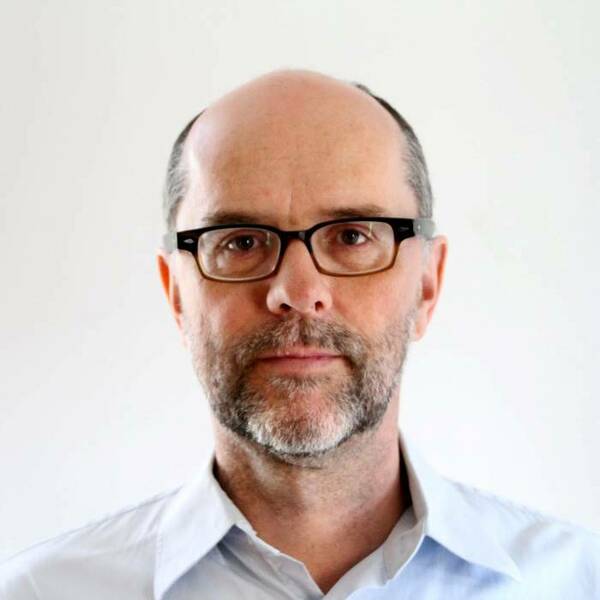
- Office
- 369 Decio Faculty Hall
Notre Dame, IN 46556 - Phone
- +1 574-631-8119
- jlund2@nd.edu
Biography
Joshua Lund teaches literature, film and cultural history on a range of topics. He is the author of Werner Herzog: American Nomadic (2020), The Mestizo State: Writing Race in Modern Mexico (2012), in translation as El estado mestizo (Barcelona & Mexico City: 2017) and The Impure Imagination (2006). He is co-organizer of Men with Guns, a Ford-funded interdisciplinary and collaborative symposium on cultures of paramilitarism in the modern Americas, published as a Special Issue of The Global South (2019). Some of Lund’s other publications include a co-edited and –introduced volume of scholarship on Gilberto Freyre, and recent essays in Écrans, GeoHumanities and Cultural Critique. He was Chaire de Professeur Invité at the Institut des Hautes Études de l’Amérique Latine, Université Sorbonne Nouvelle – Paris 3. Previously he was Professeur Invité in Arts de la Scène, de l’Image et de l’Écran at the Université Lumière Lyon 2. Lund’s current research and pedagogical projects include: the idea of work; the aesthetics of political violence; María Candelaria; transnational film; and the relations between capitalist expansion and narrative chaos in Latin America and beyond.
SFP Featured Courses:
The End of Work
What is the status of “work” today? This course takes up the history and current crisis of the idea of work by focusing on its philosophy and its aesthetic representation. We are at the cusp of a civilizational shift that has work at its center: the implacable rise of automation and artificial intelligence suggests that by the next decade there will be many, many more people than there will be jobs. And yet why should we think of this as a crisis at all? Since work’s emergence as a modern idea, dreams of human emancipation have revolved around the liberation from the toil that it implies. Adam Smith, the foundational bard of capitalism, saw in the free market the opportunity to reduce “work” to a few hours per week; two-and-a-half centuries later the World Health Organization has identified “overwork” as a public health crisis, with its most consequential symptom—“death by overwork”—common enough to be reducible to a concept, what in Japan is called karoshi. And a major world language reminds us that negócio, the modern frame for all work, is precisely a negation: of ócio, idleness, leisure, pleasure. Nation-states themselves take on as a major function of their administrative existence the regulation of who can work within their borders, and entire regions of the world—such as Latin America, which will be a focus of this course—are thought about in the popular imagination as warehouses of work, the mano de obra of the global economy. In posing the question “what is work?”, this course will move to some basic concepualizations of its form (Smith, Marx, Freud, Veblen, Foucault, etc) to a set of topics where work is at stake, for example: work and inequality; forced work (e.g. slavery); work and (im)migration; work and race; unremunerated work (‘house work’); sex work; violence work; work as commodity; work and identity; global divisions of labor; the end of work. As a way of getting into these topics, we will draw on their problematization by cultural producers, especially through contemporary film, including works by, for example, Mendonça, Herzog, Reygadas, Rivero, González Iñárritu, Martel, Cuarón, Joon-ho, Loach, Reichardt, Zhao. Comparative work is encouraged.
Capitalism and its Discontents
Since the financial collapse of 2008, it has been common to declare that capitalism is in “crisis”. But capitalism was born in crisis: from its earliest moments, it has been associated with boom-and-bust cycles, breathtaking stock bubbles, financial ruin, forced labor, and conquest. Moreover, as a historical social relation that in ways large and small organizes our lives, it is notoriously difficult to explain. Scholars of capitalism—historians, economists, sociologists—do not at all agree on what capitalism is; less agreement stands on its origins, its development, its future possibilities, even its current existence (more than one prominent thinker has declared capitalism “as we know it” to have ended). And yet at the same time, so overwhelming is the elusive presence of capitalism in our lives that one philosoher’s pithy remark has been repeated to the point of cliché: it is easier to imagine the end of the world than the end of capitalism. Which begs the question: is human civilization, simply, capitalism? With particular focus on the comparative experience of historical capitalism in the Americas, this course revolves around three broad problems: the contested origins of capitalism; the bifurcation of experiences of capitalism through uneven development; and the possible futures of capitalism. Each problem will be dealt with through a set of texts. On the one hand, we will engage some basic scholarly (historical and philosophical) texts in order to build conceptual language and identify points of controversy. On the other hand, we will draw on creative (narrative fiction and film) texts in order to contemplate the lived experience of capitalism and its contradictions in a range of settings. Language of instruction is English. Comparative work is encouraged.